
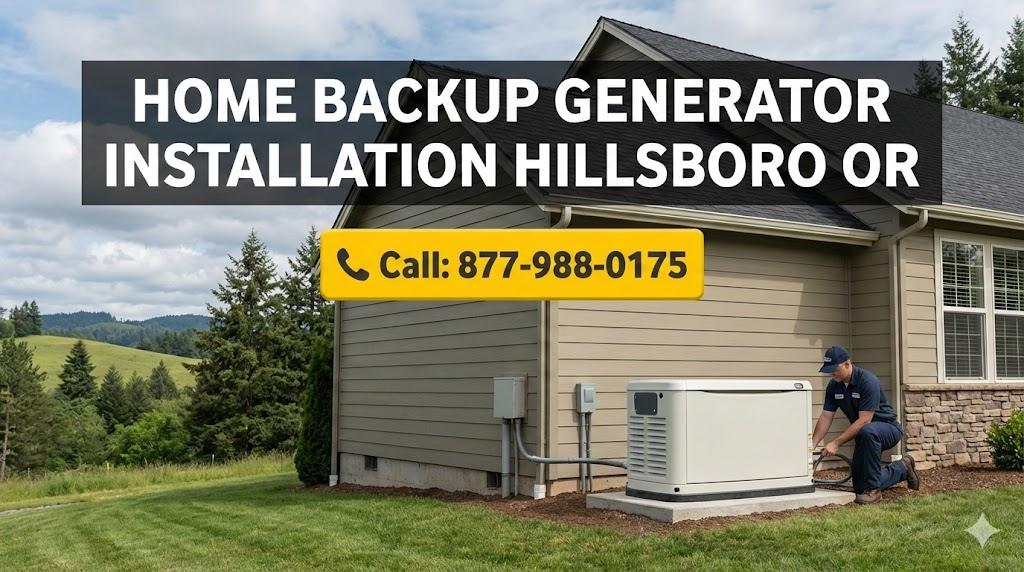
Power outages can strike Hillsboro, Oregon, at any time—whether from Pacific Northwest winter storms, summer wildfires affecting the grid, or unexpected infrastructure failures. This comprehensive guide covers everything Hillsboro homeowners need to know about installing a home backup generator, from selecting the right type and size to understanding local permit requirements and finding qualified installers. By reading this article, you’ll gain practical knowledge about generator types, fuel options, installation processes, cost factors, and maintenance needs specific to the Hillsboro area, empowering you to make an informed decision that protects your home and family during power emergencies.
Why Hillsboro Homeowners Need Backup Generators
Hillsboro’s location in the Pacific Northwest exposes residents to unique weather patterns that can disrupt power supply throughout the year. Winter ice storms frequently damage power lines and transformers, sometimes leaving neighborhoods without electricity for days. The region also experiences high winds during fall and spring seasons, which can bring down trees onto power infrastructure and cause widespread outages.
Call 877-988-0175 today to discuss your home backup power needs with a generator specialist.
Beyond weather-related concerns, the increasing demand on the Pacific Northwest power grid creates additional vulnerability. As the population in Washington County continues to grow, the strain on electrical infrastructure intensifies. Planned maintenance shutoffs and unexpected equipment failures can leave homes without power when least expected, affecting everything from refrigerated food storage to home medical equipment.
For Hillsboro homeowners who work remotely or operate home-based businesses, power reliability is essential for maintaining productivity and income. Families with young children, elderly relatives, or members with medical conditions that require powered equipment face even greater risks during extended outages. A properly installed backup generator provides peace of mind and practical protection against these disruptions.
Ready to protect your Hillsboro home from unexpected outages? Call 877-988-0175 for a consultation.
Types of Home Backup Generators
Portable Generators
Portable generators offer a flexible and generally lower-cost entry point for backup power. These units typically run on gasoline and can be moved as needed, making them useful for various applications beyond home backup. However, portable generators require manual setup during an outage, including proper outdoor placement and connection to appliances through extension cords or a manual transfer switch.
The main limitations of portable generators include fuel storage requirements, the need to refuel during extended outages, and lower overall power output compared to permanent installations. They also require proper ventilation and must never be operated indoors or in enclosed spaces due to carbon monoxide risks.
Standby Generators
Standby generators represent the most comprehensive backup power solution for homes. These permanently installed units connect directly to your home’s electrical panel through an automatic transfer switch, detecting power outages and starting automatically within seconds. Standby generators typically run on natural gas or propane, eliminating the need for manual refueling during extended outages.
Contact us at 877-988-0175 to learn which generator type is the right fit for your home.
Professional installation is required for standby generators, as they involve electrical work, fuel line connections, and concrete pad placement. While the upfront investment is higher than portable options, standby generators provide seamless protection and can power an entire home depending on the unit size selected.
Inverter Generators
Inverter generators produce cleaner electrical output than conventional portable generators, making them safer for sensitive electronics like computers, televisions, and medical equipment. These units are generally quieter and more fuel-efficient, though they typically offer lower maximum power output than comparably sized conventional generators.
For Hillsboro homeowners with moderate power needs who prefer a portable solution, inverter generators offer a middle-ground option. They are particularly suitable for homes where sensitive electronics protection is a priority.
Choosing the Right Generator Size for Your Home
Selecting the appropriate generator size requires calculating your home’s power needs during an outage. Start by identifying essential systems and appliances you need to operate, then add up their wattage requirements. Keep in mind that many appliances require higher starting wattage than running wattage, particularly those with motors like refrigerators, air conditioners, and sump pumps.
Need help determining the right generator size for your property? Call 877-988-0175 to speak with a specialist.
Most Hillsboro homes benefit from generators ranging from 7,500 watts for basic essential coverage to 22,000 watts or more for whole-house backup. The right size depends on your specific needs, including whether you want to power heating and cooling systems, well pumps, or simply maintain basic lighting and refrigeration.
Common Appliance Power Requirements
| Appliance | Running Watts | Starting Watts |
|---|---|---|
| Refrigerator | 100-400 | 1,200-2,000 |
| Sump Pump (1/2 HP) | 800-1,000 | 1,300-2,150 |
| Central Air Conditioner | 2,000-4,000 | 4,500-9,000 |
| Gas Furnace Fan | 300-800 | 500-1,300 |
| Electric Water Heater | 3,000-4,500 | 3,000-4,500 |
| Microwave | 600-1,200 | 600-1,200 |
| LED Lighting (per bulb) | 7-15 | 7-15 |
| Garage Door Opener | 550-725 | 1,100-1,400 |
| Computer and Monitor | 200-600 | 200-600 |
Working with a qualified electrician or generator installer helps ensure accurate load calculations and appropriate sizing for your specific home configuration.
The Generator Installation Process
Professional generator installation involves several distinct phases, each requiring careful attention to safety and local code requirements. Understanding this process helps homeowners prepare for the project and communicate effectively with installers.
Pre-Installation Assessment
Before installation begins, a qualified technician will evaluate your property to determine optimal generator placement, assess electrical panel capacity, and identify any modifications needed for the installation. This assessment includes reviewing your power needs, discussing fuel options, and identifying the best location for the unit considering setback requirements, noise considerations, and accessibility for maintenance.
Schedule your in-home installation assessment today by calling 877-988-0175.
The assessment phase also involves coordinating with local utilities if natural gas connection is needed or if any work near utility lines is required. In Hillsboro, this coordination is essential for ensuring safe installation that meets all regulatory requirements.
Installation Steps
- Obtain necessary permits from the City of Hillsboro Building Department
- Prepare the installation site, including pouring a concrete pad if required
- Position and secure the generator unit on the pad
- Install the automatic or manual transfer switch at the electrical panel
- Connect the generator to the transfer switch with appropriate wiring
- Install fuel supply lines (natural gas or propane) with proper shutoffs
- Complete all electrical connections according to code
- Test the system thoroughly, including simulated outage response
- Schedule final inspection with local building department
- Provide homeowner training on operation and maintenance
Let our experienced technicians handle every step of your installation. Call 877-988-0175 to get started.
Electrical Requirements and Transfer Switches
A transfer switch is a critical safety component that prevents backfeed of electricity into utility lines, which could endanger utility workers and damage equipment. Oregon electrical codes require transfer switches for all generator installations connected to home electrical systems.
Automatic Transfer Switches
Automatic transfer switches (ATS) monitor utility power continuously and activate the generator within seconds of detecting an outage. When utility power returns, the ATS automatically transfers the load back to the grid and signals the generator to shut down after a cool-down period. This hands-free operation makes ATS units ideal for homeowners who travel frequently or want maximum convenience.
Have questions about transfer switches and electrical requirements? Call 877-988-0175 for expert answers.
Manual Transfer Switches
Manual transfer switches require the homeowner to physically switch from utility to generator power during an outage. While less convenient than automatic options, manual transfer switches cost less and still provide safe, code-compliant generator connection. These switches are often paired with portable generators for homeowners seeking a more economical backup solution.
Fuel Options for Home Generators
Natural Gas
Natural gas generators connect to existing municipal gas lines, providing virtually unlimited fuel supply during outages without storage requirements. For Hillsboro homes already connected to natural gas service, this option offers convenience and eliminates refueling concerns. However, natural gas generators may experience reduced output in extremely cold temperatures, and natural gas service disruptions (though rare) would affect generator operation.
Explore your fuel options and find the right solution for your home. Call 877-988-0175 today.
Propane
Propane-powered generators use fuel stored in tanks on your property, providing independence from utility infrastructure. Propane has an indefinite shelf life when properly stored, making it reliable for emergency use. Tank sizing depends on expected outage duration and generator fuel consumption, with most residential installations using 250 to 500-gallon tanks.
Diesel
Diesel generators are known for fuel efficiency and durability, though they are less common in residential applications. Diesel fuel requires proper storage and has a limited shelf life without additives, making it less practical for occasional emergency use. However, some homeowners prefer diesel for its energy density and the availability of dual-fuel configurations.
Permits and Regulations in Hillsboro, Oregon
Generator installation in Hillsboro requires compliance with local building codes, Oregon electrical codes, and potentially utility company requirements. Obtaining proper permits protects homeowners by ensuring installations meet safety standards and pass professional inspection.
Building and Electrical Permits
The City of Hillsboro Building Department issues permits for generator installations, which typically include both building and electrical components. Permit requirements may vary based on generator size, fuel type, and installation location. Working with a licensed contractor familiar with local requirements helps streamline the permit process and avoid potential code violations.
Need help navigating Hillsboro permits and regulations? Call 877-988-0175 for guidance.
Setback and Placement Requirements
Local codes specify minimum distances between generators and property lines, windows, doors, and other structures. These setback requirements address noise concerns, exhaust safety, and fire prevention. Hillsboro’s specific requirements should be verified with the Building Department before finalizing installation plans.
Utility Coordination
Portland General Electric (PGE), which serves most of Hillsboro, has specific requirements for generator installations to ensure grid safety. These requirements include proper transfer switch installation and may involve utility inspection or notification. Natural gas installations require coordination with NW Natural for service connections or meter modifications.
Maintenance Requirements for Home Generators
Regular maintenance ensures your generator operates reliably when needed and extends equipment lifespan. Both portable and standby generators require ongoing attention, though maintenance schedules differ between types.
Routine Maintenance Tasks
Standby generators should run weekly exercise cycles to keep components lubricated and batteries charged. Most modern units perform this automatically on a programmed schedule. Homeowners should visually inspect generators monthly for signs of damage, pest intrusion, or debris accumulation around the unit.
Keep your generator running reliably. Call 877-988-0175 to schedule professional maintenance.
Professional Service Schedule
Annual professional maintenance is recommended for standby generators, including oil and filter changes, spark plug inspection or replacement, battery testing, and comprehensive system checks. Many installers offer maintenance plans that include scheduled service visits and priority response for repairs. Keeping detailed maintenance records supports warranty claims and helps track component replacement schedules.
Fuel System Maintenance
For propane and natural gas units, fuel system maintenance includes checking line connections for leaks and ensuring shutoff valves operate properly. Propane tank levels should be monitored, particularly before storm seasons when outages are more likely. Gasoline-powered portable generators require fuel stabilizer if stored for extended periods, as untreated gasoline degrades and can damage engine components.
Cost Considerations for Generator Installation
Generator installation costs vary significantly based on equipment selection, installation complexity, and local labor rates. Understanding the full cost picture helps homeowners budget appropriately and evaluate quotes from different contractors.
Equipment Costs
Portable generators suitable for basic backup needs generally range from several hundred to over two thousand dollars depending on power output and features. Standby generators typically range from approximately $3,000 to $15,000 or more for the unit alone, with whole-house systems at the higher end of this range.
Request a detailed project estimate tailored to your needs. Call 877-988-0175 today.
Installation Costs
Professional installation for standby generators typically adds several thousand dollars to the project, covering labor, electrical work, transfer switch installation, fuel line connection, and permit fees. Total installed costs for standby generator systems commonly range from $7,000 to $20,000 or higher depending on system size, installation complexity, and site preparation requirements.
Ongoing Operational Costs
Fuel costs during operation depend on generator size, fuel type, and local utility rates. Natural gas tends to offer lower fuel costs in areas with established service, while propane costs vary with market conditions. Annual maintenance costs typically range from $150 to $500 depending on service plan coverage and any repairs needed.
Have questions about generator costs and financing options? Call 877-988-0175 to speak with our team.
Finding a Qualified Generator Installer in Hillsboro
Selecting the right installer is as important as choosing the right generator. A qualified professional ensures safe installation, code compliance, and reliable operation.
What to Look For
- Oregon electrical contractor license (CCB license)
- Experience with generator installations specifically
- Familiarity with Hillsboro permit requirements
- Manufacturer certifications or authorizations
- Adequate insurance coverage
- Positive references from previous customers
- Clear written estimates and warranty information
Connect with a qualified Hillsboro generator installer. Call 877-988-0175 now.
Questions to Ask Potential Installers
Before hiring, ask about the contractor’s experience with your preferred generator brand, their typical installation timeline, and what the installation includes. Request information about warranty coverage, both for equipment and installation labor. Ask whether they handle permit applications and inspections, and inquire about their availability for future maintenance and repairs.
Benefits of Professional Installation vs DIY
While some homeowners consider DIY generator installation to reduce costs, professional installation offers significant advantages that typically outweigh potential savings.
Safety Considerations
Generator installation involves electrical work that can be dangerous if performed incorrectly. Improper wiring or transfer switch installation creates risks of electrical shock, fire, and deadly carbon monoxide exposure. Professional installers are trained to manage these hazards and ensure all safety protocols are followed.
Protect your family with safe, professional generator installation. Call 877-988-0175 today.
Warranty and Code Compliance
Most generator manufacturers require professional installation to maintain warranty coverage. DIY installation may void equipment warranties, leaving homeowners responsible for repair costs. Additionally, unpermitted installations can create problems when selling your home and may not pass inspection if discovered, requiring costly corrections.
Long-Term Reliability
Professional installers bring expertise that ensures optimal system configuration, proper load balancing, and correct fuel system setup. These factors affect long-term reliability and performance, potentially preventing costly repairs and ensuring your generator performs when you need it most.
Don’t wait for the next power outage to leave you in the dark. Call 877-988-0175 now.
Summary: Key Points to Remember
- Power outages in Hillsboro can result from winter storms, wind events, wildfires, and grid strain, making backup power valuable for many homeowners
- Generator types include portable, standby, and inverter models, each with distinct advantages and limitations
- Proper sizing requires calculating total wattage needs including starting watts for motor-driven appliances
- Transfer switches are required by code and prevent dangerous backfeed to utility lines
- Fuel options include natural gas, propane, and diesel, each with different storage and availability considerations
- Permits are required in Hillsboro for generator installation; verify specific requirements with the Building Department
- Professional installation ensures safety, code compliance, and warranty protection
- Regular maintenance including weekly exercise cycles and annual professional service maintains reliability
- Total costs for standby generator systems typically range from $7,000 to $20,000 or more depending on size and installation requirements
- Verify contractor credentials including Oregon CCB license, insurance, and experience before hiring
- Coordinate with utilities including PGE for electrical connections and NW Natural for gas service as needed
Take the first step toward reliable backup power for your Hillsboro home. Call 877-988-0175 to schedule your consultation today.