
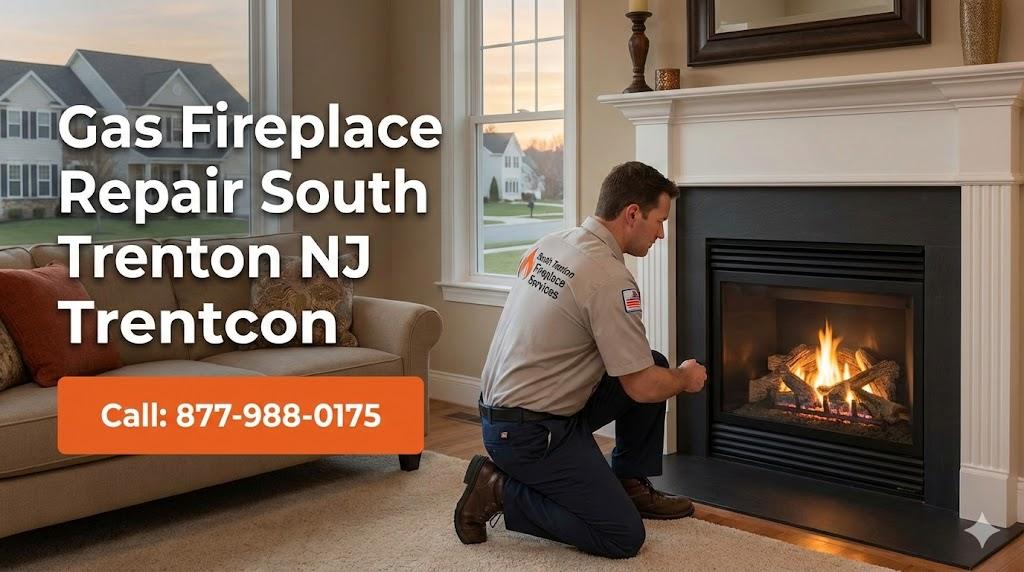
A gas fireplace can be a comfortable, convenient heat source—until ignition problems, strange odors, soot, or frequent shutoffs make it stressful or unreliable. This article is worth reading because it explains how gas fireplace systems typically fail, what can be checked safely at home, what should be handled by a qualified technician, and how to plan repairs and maintenance specifically for homes in South Trenton, New Jersey.
Have questions about gas fireplace repair in South Trenton NJ? Call 877-988-0175.
How gas fireplaces work (why repairs differ)
Gas fireplaces aren’t all built the same, and repairs vary based on the unit type and venting design. Some systems are traditional vented fireplaces that use an existing chimney or flue, while others are direct-vent units that use a sealed glass front and a dedicated intake/exhaust vent path. There are also vent-free (ventless) models in some homes, which have their own operating limits and safety considerations.
Inside most units you’ll find a gas supply connection, a burner, an ignition method (standing pilot or electronic ignition), and safety components that shut the gas off if the flame isn’t proven. Many fireplaces also add blowers, wall switches, thermostats, remote receivers, or smart controls that can fail independently of the burner system. That’s why a “no heat” complaint can be anything from a dead remote battery to an ignition module issue or a venting-related shutdown.
If your fireplace is an insert (installed into an existing masonry fireplace opening), access and venting configuration can make diagnosis more involved. Inserts also rely on correct clearances, correct venting, and proper sealing at the surround—small installation issues can show up later as poor performance.
Not sure what type of unit you have—direct-vent, vented, or insert? Call 877-988-0175.
Common gas fireplace problems (and what they can mean)
Homeowners in South Trenton often notice issues when the weather turns colder and the fireplace runs more frequently. Common symptoms include delayed ignition (a “whoosh” after clicking), pilot outages, burners that light and then shut off, weak flames, unusual smells, or soot collecting on the glass and logs. Any of these symptoms can be a sign the system needs cleaning, adjustment, part replacement, or venting attention.
Intermittent failures are especially common: the fireplace runs fine one day and refuses the next. That can happen when a sensor is drifting out of tolerance, a connection is loose, a receiver is failing, or dust and debris intermittently disrupt the pilot and burner flame pattern. Because gas fireplaces are safety-controlled appliances, many “mystery shutdowns” are the unit doing its job—shutting down when it detects unsafe or abnormal conditions.
Soot is another red flag. A properly working gas fireplace typically burns cleanly, so heavy black deposits on glass, logs, or the firebox usually indicate a combustion or configuration problem that should be inspected rather than ignored.
If the fireplace won’t start or keeps shutting off, schedule a diagnostic—call 877-988-0175.
Quick symptom-to-check guide
| Symptom | What it might point to | Why it matters |
|---|---|---|
| Clicking but no ignition | Ignition system fault, control fault, gas supply issue | Repeated attempts can be unsafe and hard on components |
| Lights then shuts off | Flame-sensing issue, dirty pilot, airflow/venting shutdown | May indicate a safety shutdown that needs diagnosis |
| Pilot won’t stay lit | Dirty pilot, aging thermocouple/thermopile, draft/airflow disturbance | Causes unreliable starts and nuisance outages |
| Odor during operation | Dust burn-off, but also possible venting/combustion concerns | Needs careful evaluation if persistent or strong |
| Soot on glass/logs | Incorrect media/log placement, burner contamination, airflow issues | Can worsen over time and signal poor combustion |
Safety essentials: odors, gas, and indoor air
A gas fireplace should never be used if you suspect a gas leak, if you feel unwell when it runs, or if you notice persistent strong odors that don’t resolve after brief first-use dust burn-off. When in doubt, turn the fireplace off, ventilate the area if appropriate, and contact a qualified professional to evaluate the unit before continued use.
Carbon monoxide (CO) is a byproduct risk for any fuel-burning appliance if combustion or venting is not correct. A practical home-safety step is installing and maintaining CO alarms in appropriate locations per the alarm manufacturer instructions and any applicable local requirements. CO alarms are a backup layer, not a substitute for proper venting, correct installation, and regular inspection.
If anyone experiences symptoms that seem to occur when the fireplace runs (such as headaches or dizziness), stop using the fireplace until it’s checked. Safety symptoms should be treated as urgent, and repeated “testing” by cycling the fireplace on and off is not a safe troubleshooting method.
For a safety-focused inspection appointment, call 877-988-0175.
What you can check at home (low-risk only)
Some “no start” issues come down to controls rather than the gas burner itself. Before scheduling service, a few basic checks are typically safe if you can do them calmly and without disassembling anything. The goal is not to repair the fireplace yourself—it’s to avoid an unnecessary service call for something like a dead remote battery.
Here are low-risk checks that usually don’t require opening the burner compartment or touching gas fittings. If anything feels uncertain, stop and schedule service instead.
- Confirm the wall switch is on (if your unit has one) and any thermostat is set to call for heat.
- Replace remote-control batteries and confirm the receiver is set correctly (many have OFF/ON/REMOTE settings).
- If your unit uses household power, check that the outlet or breaker feeding the fireplace hasn’t tripped.
- Make sure any glass front or access panel is fully seated and latched if your model requires it for safe operation.
- If the unit has been off for a long time, allow time for normal startup behavior (some systems have short delays).
Do not attempt to adjust gas pressure, modify burner settings, or bypass safety switches. Those steps are not homeowner-friendly and can create unsafe conditions.
Prefer to skip the guesswork? Call 877-988-0175 to book service.
When to stop DIY and call a pro
Stop troubleshooting and call a qualified technician when there’s persistent odor, visible soot buildup, repeated shutdowns after ignition, delayed ignition, or any sign of damage to glass, wiring, or internal components. Also call for service if the pilot repeatedly goes out or the unit needs frequent relighting—those are signs the system is not operating reliably.
A professional visit is also the right choice when the fireplace is an insert with limited access, or when the venting route goes through finished areas, a chase, or a chimney where hidden issues can exist. In many cases the “real fix” isn’t one part—it’s cleaning, verifying correct flame characteristics, and confirming the unit is operating safely with the home’s airflow and venting.
If your home recently had renovations, painting, flooring, or dust-producing work, mention it. Household airflow and dust can affect fireplace operation, especially around pilot assemblies and air openings.
If you’ve tried basic checks and it still won’t run, call 877-988-0175.
What a professional repair visit usually includes
A thorough service call usually begins with identifying your fireplace make/model and confirming the venting type and ignition system. The technician will typically inspect the pilot/ignition components, check burner condition, confirm that wiring and connections are intact, and verify that controls (switch, thermostat, remote receiver) are functioning properly.
Cleaning is a big part of many successful repairs. Dust, pet hair, lint, and spider webs can interfere with pilot operation and burner flame pattern over time. A technician may clean the pilot assembly, burner ports, and the firebox area in a way that matches the manufacturer’s instructions, then re-test for reliable startup and stable operation.
If the symptom suggests venting or combustion issues (for example, persistent odor, soot, or unusual flame patterns), the inspection should include the vent route and termination condition where accessible. The goal is to confirm the unit is venting correctly and getting adequate combustion air for safe operation.
Want a pro to inspect ignition, burners, and controls in one visit? Call 877-988-0175.
Typical components that may be tested or serviced
| System area | Examples of what’s involved | Common outcome |
|---|---|---|
| Ignition | Igniter condition, wiring, module behavior | Restores reliable startup |
| Flame proving | Thermocouple/thermopile or flame sensor checks | Prevents nuisance shutdowns |
| Burner/pilot cleanliness | Clearing ports, removing debris | Improves flame stability |
| Controls | Receiver output, wall switch continuity | Fixes “no response” problems |
| Glass/gaskets | Seal condition, latch integrity | Supports safe airflow design |
Concerned about venting or odors? Call 877-988-0175 to schedule an evaluation.
Repair cost factors (what changes the price)
Gas fireplace repair costs are not one-size-fits-all, because the scope can range from a basic cleaning and adjustment to diagnosing an intermittent electronic ignition fault. The factors that most often change cost include diagnostic time, parts required, how difficult the unit is to access, and whether venting work is needed.
Parts availability matters too. Some fireplaces use manufacturer-specific modules, proprietary remotes, or specialty glass and gaskets. If parts must be ordered, the job can turn into a two-visit process. Also, if the fireplace is a tight insert installation, labor time can increase due to disassembly and reassembly steps.
To keep quotes comparable, ask each provider to separate the diagnostic fee, labor, parts, and any optional recommendations. Clarity is more useful than a vague “all-in” number, especially when more than one issue may be present.
To compare repair options for your model, call 877-988-0175.
Permits and inspection questions in South Trenton NJ
In South Trenton (Trenton, Mercer County), permit requirements can depend on what work is being done. Minor repairs like cleaning or replacing certain service parts may not be treated the same as replacing the entire fireplace, modifying venting, or changing gas piping. The safest approach is to confirm requirements with the local code office when planning replacements or venting changes.
If a contractor recommends altering venting, resizing liners, changing termination locations, or swapping the fireplace type, it’s a good time to ask how the work will be inspected and documented. Clear documentation helps protect safety and can also reduce headaches later during home inspections or resale.
A good service provider should be willing to explain whether the scope is a maintenance/repair visit or a modification that may require permits and inspections.
Planning a replacement or major change? Call 877-988-0175 to discuss next steps.
Preventive maintenance that reduces breakdowns
Preventive maintenance is about dependable ignition, clean combustion, and catching small issues early. Even if a gas fireplace “looks fine,” dust buildup and component wear can slowly reduce reliability—leading to nuisance shutdowns, pilot problems, or delayed ignition.
A sensible approach is to schedule service before peak heating season, especially if the fireplace hasn’t been used in months. That timing helps avoid first-use surprises and makes it easier to book appointments before schedules fill up. Maintenance visits are also a good time to confirm the glass is sealing correctly, the controls operate as expected, and the flame pattern looks normal.
In between professional visits, keep the area around the fireplace clean and unobstructed, and follow the manufacturer guidance for operation and any user-maintainable items (like remote batteries).
Set up annual fireplace service—call 877-988-0175.
Simple maintenance rhythm
| When | What to do | Notes |
|---|---|---|
| During the season | Watch for new odors, soot, delayed ignition, or odd flame behavior | Stop using and schedule service if symptoms persist |
| Before the season | Plan a professional inspection/cleaning | Helps reduce “first cold day” failures |
| After renovations | Re-check operation if dust/airflow changed | Renovations can affect airflow and cleanliness |
| Anytime | Keep CO alarms maintained per manufacturer instructions | Replace batteries/units as directed |
Choosing a gas fireplace repair provider in South Trenton
When comparing providers, prioritize experience with your type of fireplace (insert vs built-in, standing pilot vs electronic ignition, vented vs direct-vent). A technician who regularly services your style and brand is more likely to diagnose efficiently and recommend the right fix rather than swapping parts by trial and error.
Ask practical questions that reveal how the provider approaches safety and reliability:
- Will the visit include both troubleshooting and cleaning if needed?
- Will venting be evaluated if symptoms suggest airflow or exhaust issues?
- Can findings be explained clearly (what failed, why it failed, and what prevents recurrence)?
- Are model-specific parts sourced correctly rather than substituted?
Also, avoid anyone willing to “guarantee” a diagnosis over the phone without seeing the unit. Fireplace problems often require on-site testing and inspection.
Need help choosing the right service approach for your setup? Call 877-988-0175.
Direct-vent, vented, and insert considerations
Direct-vent fireplaces depend on a sealed combustion system, so gasket and glass integrity matter more than many homeowners realize. If the glass isn’t seated properly or a gasket is compromised, the unit may operate poorly or shut down due to safety controls. Inserts can have additional constraints due to the existing masonry opening and vent path.
Vented fireplaces using a chimney or flue need a clear and intact path for exhaust. Blockages, disconnected sections, or termination issues can cause performance problems and may increase indoor air concerns. Any suspicion of venting problems is a strong reason to schedule professional evaluation.
Vent-free fireplaces have their own requirements and operating limits, including room sizing and ventilation needs. Follow manufacturer guidance closely and stop using the unit if odors or symptoms occur.
For insert and direct-vent troubleshooting, call 877-988-0175.
Control and remote problems (very common)
Many “it won’t turn on” calls are control related. Wall switches can wear out, thermostat wiring can loosen, and remote receivers can fail or get switched into the wrong mode. Batteries are the simplest cause, but not the only one—corrosion, weak signal, or incorrect receiver settings can all block startup.
If the fireplace works with the wall switch but not the remote (or vice versa), that’s useful diagnostic information. Share that detail when scheduling service because it can help narrow down the issue faster.
If your receiver is mounted near the firebox, heat exposure over time can shorten its life. A technician can confirm whether the receiver is failing, miswired, or simply set incorrectly.
If the remote, wall switch, or receiver is acting up, call 877-988-0175.
Soot, cloudy glass, and flame appearance
Cloudy glass or black soot is often a sign that something is off—either the unit needs cleaning, the burner is not distributing flame correctly, or the logs/media are not positioned according to the manufacturer diagram. Even small shifts in log placement can change how flame contacts surfaces, which can increase deposits.
Never rearrange logs based on guesswork or aesthetics. If you don’t have the original placement diagram, a technician can reference manufacturer specifications and set the logs properly. Correct placement is both a performance and safety issue.
After cleaning or adjustment, the fireplace should be re-tested to confirm stable ignition and a consistent flame pattern. If deposits return quickly, it’s a sign that a deeper cause still exists and should be addressed.
Seeing soot or cloudy glass? Call 877-988-0175 to schedule service.
FAQs: gas fireplace repair South Trenton NJ
Why does my fireplace turn on and then shut off?
Many fireplaces shut down when they can’t “prove” flame through their safety sensors, or when a safety limit trips due to abnormal conditions. Cleaning, sensor testing, control diagnosis, and venting evaluation (when indicated) are common steps to resolve it safely.
Is a little smell normal?
A brief dust burn-off smell can happen when a unit first runs after a long period off, but persistent or strong odors should be treated as a warning sign. Stop using the fireplace and schedule a professional evaluation if odors persist or if anyone feels unwell.
Should I repair or replace?
The decision usually depends on the age of the unit, part availability, frequency of breakdowns, and whether the fireplace meets your needs. A service visit can clarify what’s failing and whether a repair is likely to be durable or just temporary.
Ready to book an appointment? Call 877-988-0175.
Most important things to remember
- Gas fireplace problems often show up as ignition issues, shutdowns, odors, or soot—don’t ignore persistent symptoms.
- Limit DIY to low-risk checks (controls, batteries, obvious settings) and avoid disassembly or gas adjustments.
- Stop using the fireplace if you suspect a gas leak, if strong odors persist, or if anyone feels ill during operation.
- A good repair visit typically combines diagnosis, cleaning, and re-testing for reliable ignition and stable operation.
- Costs depend on access, parts, troubleshooting time, and whether venting or safety-related corrections are needed.
- For planning repairs or maintenance in South Trenton NJ, focus on clear explanations, documented findings, and model-specific experience.
For gas fireplace repair in South Trenton NJ, call 877-988-0175.